
It’s been a few weeks, but we have already been able to get bass and drum tracks for eight of the ten songs that will go on The New Outliers upcoming full-length.
Obtaining a good foundation tone for the bass guitar initially posed a little bit of a problem and how we fixed that is what I will focus this post on. TNO’s bassist, Howard, is a pretty typical rock bass player in that he favors a Fender P-Bass and Ampeg SVT-style amp for his live rig. As I mentioned in my previous post, we decided to run all of the guitars and bass direct during the basic tracking process, so as to minimize the amount of bleed going into the drum mics. When possible I really like to mix a dry signal from a DI Box plus the sound of a mic’d amp when recording bass. Since this was not really possible we ran Howard’s P-Bass directly into a Countryman Type 85 DI Box and used the SVT amp model built-in to my DAW (Digital Audio Workstation), Logic Pro X.
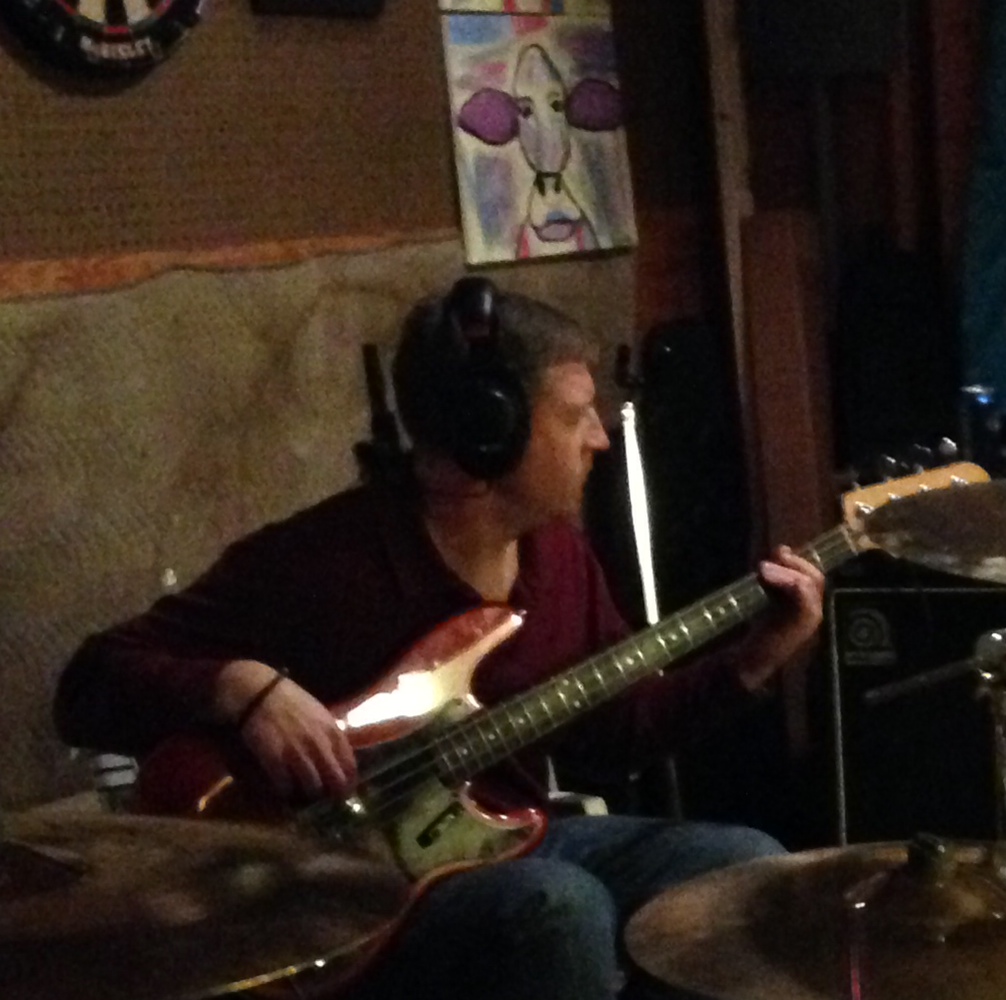
Howard from The New Outliers laying down the low-end during a recording session – Dec. 2014
Howard plays with his fingers and although his playing style would normally dictate the use of a pick, he gets a nice, round sound from his setup which works particularly well within the context of the dual guitar attack provided by co-guitarists Steve and Brett. I personally think that the P-Bass is the best sounding bass you can use for rock n’ roll. Its’ single hum-bucking pick-up is able to produce a very punchy, in your face sound that can cut through a mix like knife through butter. When Howard initially plugged in though, we were not blown away. His sound was muted without much definition. On top of that we were getting a lot of extraneous finger noise off the strings which was clouding the tone significantly giving it a very metallic sound. The first tracking session was largely spent on fixing some latency issues we were having with the computer setup.
The following week I decided to bring my 92′ standard P-bass in for Howard to try out. The strings on it are a little newer and in general just has a lot of mojo going on with it in my opinion. We were already getting better sounds with this change-up but I wasn’t done quite yet. Instead of patching the DI box into one of the pres on my Focusrite Octo-Pre, I decided to send it to a dedicated channel strip, the Focusrite TrakMaster Pro.
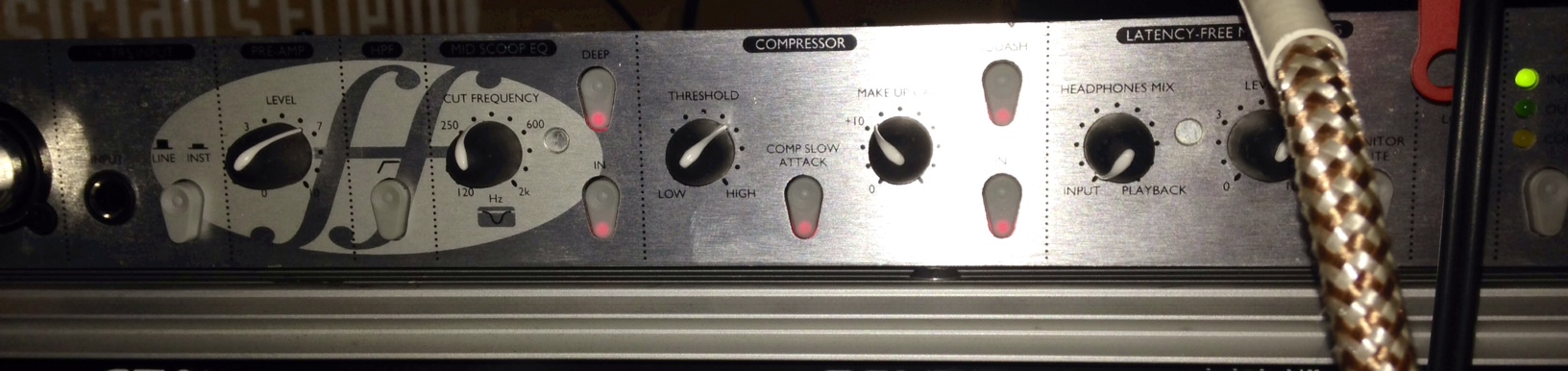
The Focusrite TrakMaster Pro has a very cable compressor and mid-scoop EQ functions for dialing in nice bass tones.
Now this particular piece of gear doesn’t seem to get a lot of love online or in recording forums, but the one area I have always felt it excels at is bass guitar. It has a mid-scoop EQ function which allowed me to dial out some of the string noise we were still getting. It also has a pretty capable compressor which I used to even out Howard’s playing as we tracked. This allowed him to dig in or fall back as necessary while still sending a nice, even signal to the board. With these changes I was able to get a nice foundation tone for the bass guitar (to be shaped further in the mix process) that cuts well and works well with the drums to produce an engaging rhythm section for these songs.
We’re hoping to finish tracking drums and bass for the last two songs we have left next week. After that it’s a short break for the Christmas holiday and then we start on what will probably be my favorite part – guitar overdubs!
 Distilled Sounds